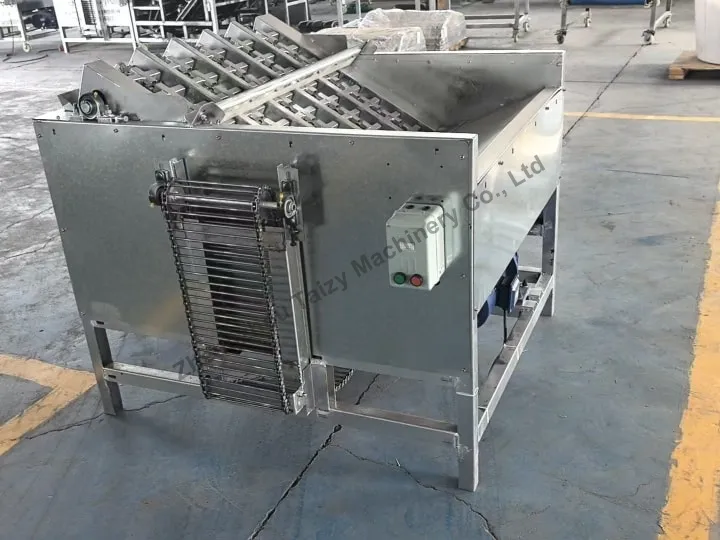
What are the processing steps in a walnut cracking line?
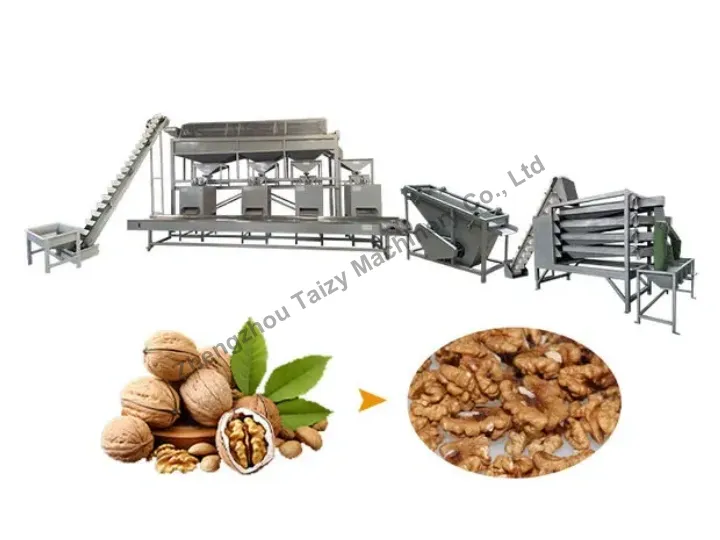
In the initial processing stage for walnuts, manual methods can no longer meet the demands of large-scale operations. The advent of the walnut cracking line fundamentally addresses three long-standing issues: inconsistent efficiency, high kernel loss, and a lack of control over the quality grade of the finished product. This article outlines the typical processing workflow of modern walnut processing lines.
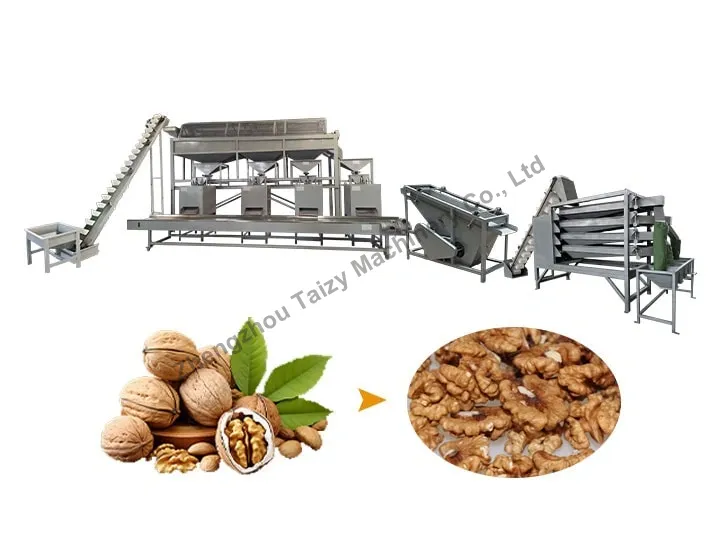
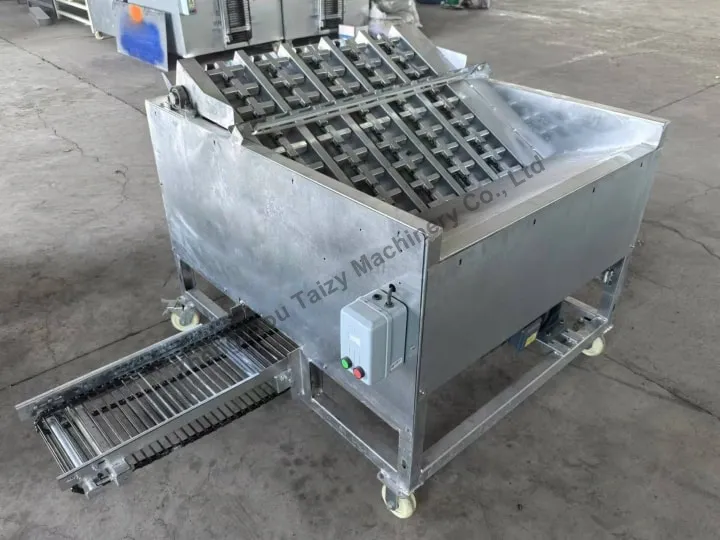
Step 1: Grade the walnut
The walnut shelling line typically begins with grading rather than immediate cracking; this is the first step toward ensuring efficiency. Processing mixed sizes of walnuts leads to uneven application of force:
- Small nuts crush easily, resulting in broken kernels.
- Large nuts are difficult to crack, leading to waste.
- Kernel yield fluctuates significantly.
The walnut grading machine sorts the raw material by size, ensuring consistency in the subsequent shelling process and minimizing loss at the source.
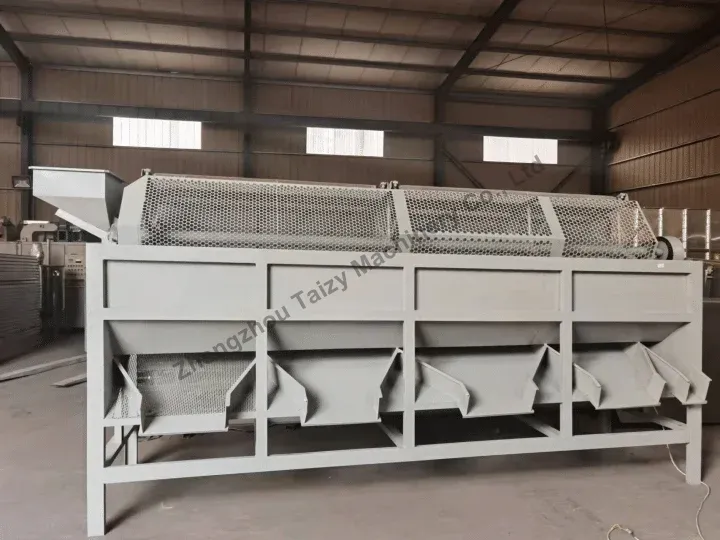
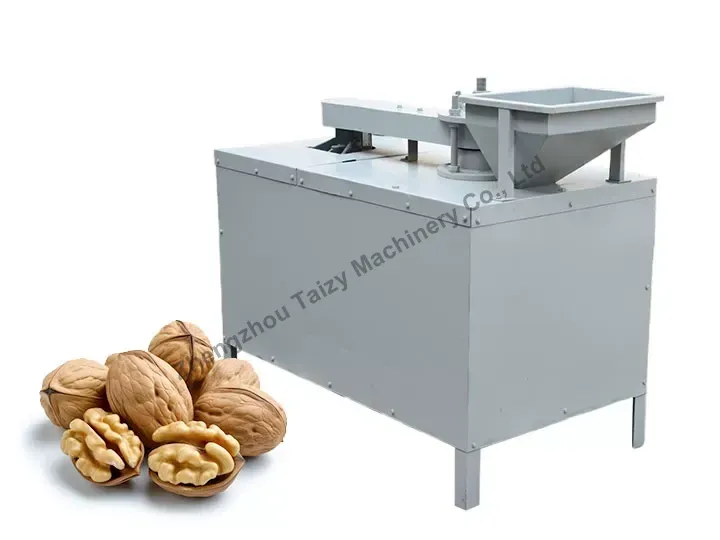
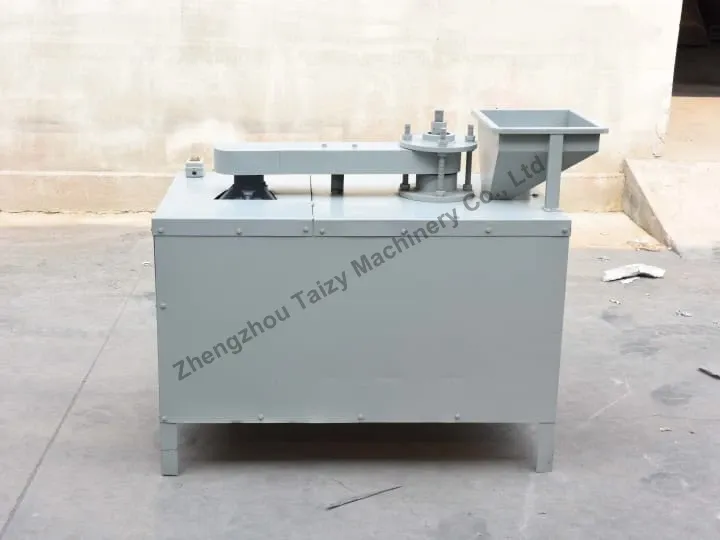
Step 2: Shell the walnuts
The shelling stage determines the core efficiency of the entire walnut cracking line.
The key lies not in simply crushing the shell, but in controlling the cracking method:
- Ensuring the shell cracks under uniform force
- Minimizing damage to the kernel
- Adjusting shelling parameters according to specifications
Feeding walnuts of different sizes into the corresponding shelling machines better ensures shelling efficiency
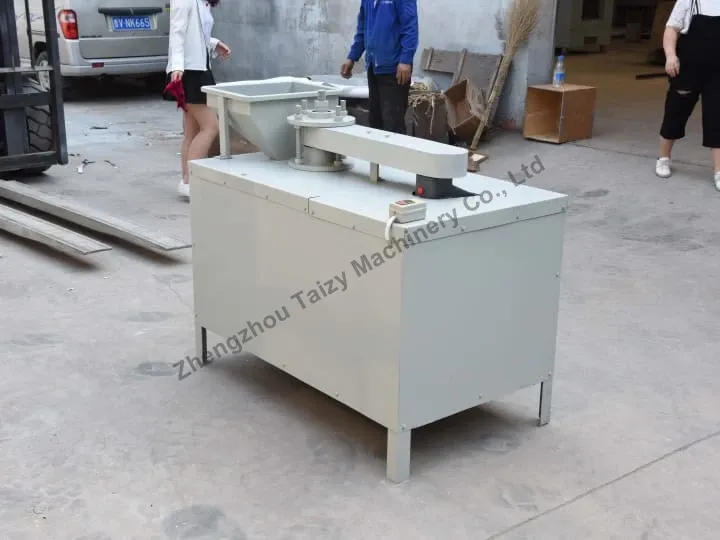
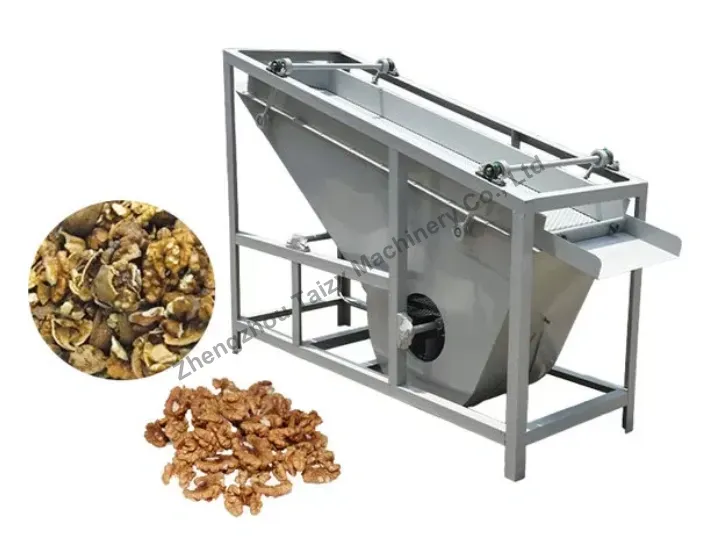
Step 3: Separation of shell and kernel
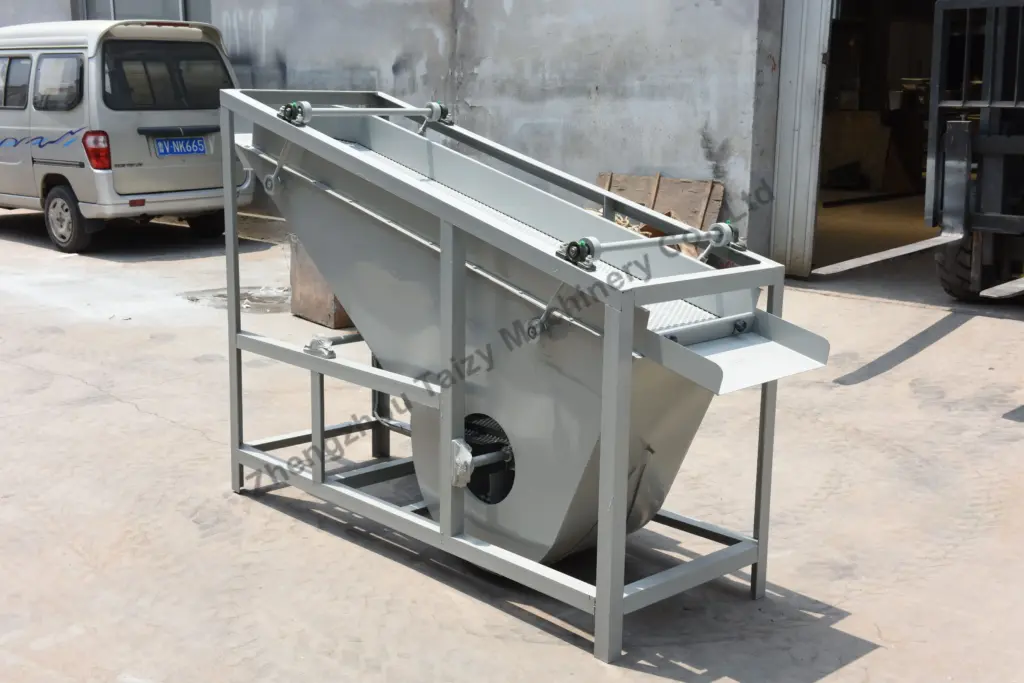
The third step in the walnut cracking line is to separate the shells from the kernels. To obtain cleaner walnut kernels, a gravity-type destoner is typically included to remove impurities.
Step 4: Grade walnut kernels
Once walnut kernels are extracted from their shells, they do not immediately proceed to the sales stage; instead, they undergo a further grading process.
The primary objective of this process is to sort the kernels based on their condition, thereby establishing standardized criteria for quality and appearance.
This grading approach helps enhance the commercial value of the walnut kernels, ultimately increasing overall utilization rates and economic returns.
Kesimpulan
This workflow represents the standard configuration for a walnut cracking line, enabling stable, continuous processing from raw material to finished walnut kernels. However, in practical applications, production line configurations are not fixed; instead, the system is adjusted and configured according to the customer’s specific requirements.
If you are looking for a complete walnut processing line, please contact us with your requirements, and we will customize a production line configuration tailored to your processing needs.